startup executive search Archives - Page 5 of 9 - Charlie Solórzano | The Race Conditions Model™ | U.S.-Mexico Executive Search
January 3, 2026
Founder-CEO reaching organizational ceiling preventing company scaling and growth

When Your Founder-CEO Becomes the Ceiling

Three COOs in four years. Each one arrived with impressive credentials. Each one failed. The board kept asking: why can't we find someone who works? I've seen this movie before. The problem wasn't the COOs. The problem was the founder who hired them—and then couldn't let them do their job. The fierce control that built the company had become the bottleneck preventing it from scaling. This is The Founder's Paradox—and it's playing out in boardrooms right now. The founder isn't failing. They've succeeded themselves into a constraint. Their speed becomes the organization's speed limit. Their bandwidth becomes the capacity ceiling. Pattern recognition across two decades: the signals are visible months before the breaking point.
January 13, 2026
F1 pit stop transition moment representing the shift from founder mode to operator mode at Series B

Series B: When Founder Instincts Become Bottlenecks

Three Series B founders in Guadalajara. Each built product-market fit through sheer force of will. Each hired seasoned operators to scale what they'd created. Each watched those hires fail within nine months. The hires weren't wrong. The timing was. Founders thrive in Founder Mode—direct control, immediate decisions, instincts calibrated for chaos they can touch. But Series B shifts the conditions entirely. The founder calibrated for tight corners suddenly enters high-speed straights, still braking for corners that no longer exist. The Founder's Paradox™ names this pattern: the fierce control that built the company becomes the ceiling that prevents it from scaling. The pit window opens at Series B. Not every founder needs to step out entirely—but ignoring the calibration mismatch guarantees a revolving door of C-suite hires who "just didn't work out."
January 14, 2026
Founder contemplating next chapter while overlooking city skyline at dawn

Founder Second Act: Life After Stepping Back from CEO

What happens when the company you built no longer needs you at the controls? This guide examines how founders navigate the transition from CEO to their second act—drawing lessons from Formula 1 team owners who faced the same challenge. From Ron Dennis's cautionary tale at McLaren to Ross Brawn's masterful reinvention, discover the frameworks that separate founders who thrive after transition from those who struggle with irrelevance.
January 16, 2026
Race driver adapting to different car conditions, representing executive calibration mismatch between big tech and startup environments

Why Top Tier Executives Fail at Scrappy Startups

The resume looked perfect. VP of Product at a company everyone recognizes. Eight years building teams at scale. Six months later, she's paralyzed. Decisions that should take hours take weeks. The scrappy team that moved fast before she arrived now waits for processes that don't exist. She wasn't the wrong hire—she was the wrong calibration for the conditions. Executives from large tech companies operate inside invisible infrastructure: dedicated recruiters, established processes, automated systems. When they join startups where that infrastructure doesn't exist, their instincts pull them toward rebuilding what they had rather than adapting to what the startup needs. Stop hiring for pedigree. Start diagnosing for conditions. The question isn't whether they're talented—it's whether their talent is tuned for the track you actually have.
January 18, 2026
F1 pit wall during a race, representing the organizational support structures executives rely on for critical decisions

When the Pit Wall Goes Silent: Executive Decision-Making Under Uncertainty

The moment of truth for executives isn't when everything is clear and the organization is aligned. It's when the support structures go quiet, the information is incomplete, and the leader has to choose anyway. Drawing from Ayrton Senna's legendary 1991 Brazilian Grand Prix—where he finished with only sixth gear working and was lifted bodily from his car—this article explores why standard interview processes fail to assess the capability that matters most: decision-making when the pit wall goes silent. Most organizations hire executives who excel at executing consensus decisions, then watch them freeze when the consensus doesn't exist. Here's how to identify leaders calibrated for the moments when talent alone isn't enough.
January 19, 2026
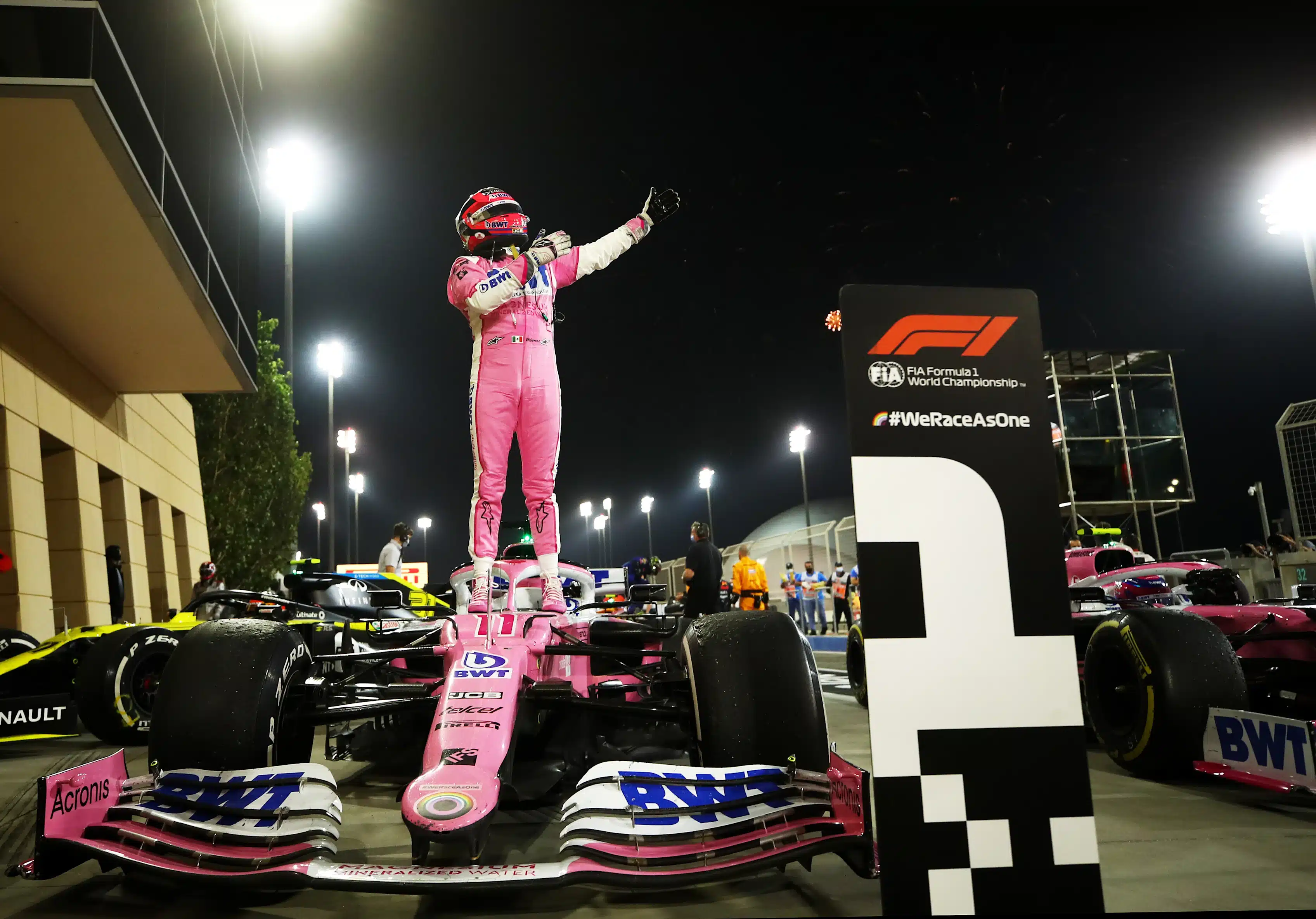
F1 tire showing wear patterns, representing the balance between performance extraction and resource preservation that defines executive leadership in constrained conditions

The Tire Whisperer: Executives Who Excel in Resource-Constrained Conditions

Sergio Perez's 2020 Sakhir Grand Prix victory—from last place to first after a lap-one collision—wasn't just dramatic racing. It demonstrated a capability that separates certain executives from the rest: the ability to extract performance from conditions where conventional analysis says none should exist. Drawing from F1's greatest tire managers (Perez, Button, Alonso), this article explores why executives from well-resourced environments often fail when constraints arrive, how to identify leaders calibrated for scarcity rather than abundance, and why resource efficiency can become competitive advantage. The executives who master this capability don't just survive constrained conditions—they turn constraints into competitive space others can't access.
January 23, 2026
Visual comparison of CFO types showing financial steward versus capital raising CFO skills for Series B startup fundraising

The CFO Who Can’t Fundraise: Series B’s Most Expensive Mistake

Your new CFO has impeccable credentials. Twenty years at a Fortune 500 company. CPA. MBA from a top program. Six months in, your books are pristine and your controls are bulletproof. There's just one problem: you're heading into Series B and she freezes in front of investors. I see this pattern constantly. The board hires for financial stewardship when they actually need capital markets leadership. They get a brilliant controller in a CFO costume. These are fundamentally different skill sets. Ferrari lost a championship learning this lesson with Mattia Binotto. McLaren won consecutive titles because Zak Brown understood that commercial leadership and technical leadership require different people. Your Series B needs a CFO who can raise capital, not just count it.
January 26, 2026
Organizational chart showing hollow middle management layer between C-suite executives and individual contributors in Series B startup

The Middle Management Void: Why Your Series B Is Stalling

our CFO spent three hours yesterday reconciling expense reports. Your VP of Engineering is personally reviewing every pull request. Your CTO is troubleshooting a customer's API integration. Welcome to Series B, where your C-suite has become the world's most overqualified middle management team. I see this pattern constantly in growth-stage companies. The org chart looks impressive. Strong executives at the top. Talented individual contributors doing the work. But between them? A hollow layer where directors and senior managers should be. McKinsey research shows investors attribute 65 percent of portfolio company failures to people and organizational issues. The most common structural failure? The missing middle. McLaren F1 spent half a decade learning this lesson the expensive way before restructuring their technical leadership. Your Series B doesn't have that kind of time.
January 28, 2026
VP Sales in chaotic founder-era conditions versus a structured, scalable sales environment

Why Your VP Sales Failed: The Setup Nobody Names

Most VP of Sales failures aren't talent failures — they're organizational failures wearing a human face. The founder succeeded despite the lack of systems. The VP Sales cannot succeed without them. Here are the four conditions that guarantee failure, and what to fix before your next hire.