
The Race Conditions Model™
A Diagnostic Framework for Leadership Decisions
The Hire Everyone Celebrates—Until They Don't
The CFO arrived with impeccable credentials. Twenty-two years at Fortune 500 companies. An MBA from Wharton. A reputation for turning around underperforming finance functions. The board was thrilled.
Fourteen months later, she was gone.
Not because she lacked talent. The CFO failed because nobody had diagnosed the conditions she was walking into—or whether her calibration matched them. The founder wasn't ready to cede control, even though he'd said he was. The board lacked governance maturity. The organization was still sprinting when she was wired for institutionalization. No one had mapped where her authority ended and where the founder's began. And critically, no one assessed whether her operating horizon—calibrated for 5-year strategic arcs—matched the role's actual demands for 12-month execution cycles.
Every condition was wrong. Every calibration signal was missed. An exceptional executive became a cautionary tale.
I've watched this scenario unfold hundreds of times across twenty years of executive search in the U.S. and Mexico markets. The details change. The underlying failure is always the same: organizations diagnose talent when they should be diagnosing conditions—and they assess credentials when they should be reading calibration.
The Structural Reality Most Decision-Makers Miss
Leadership success is not determined by talent. It is determined by conditions—and by the alignment between executive calibration and those conditions.
Most organizations spend months evaluating candidates—credentials, track record, cultural fit—while treating conditions as background noise. They assume the environment is stable, manageable, or somehow irrelevant to the hiring decision. And they assume that a talented executive will succeed in any context.
They're wrong on both counts.
Conditions are the primary variable. The founder, who is secretly ambivalent about stepping back. The board that looks credentialed but operates as a rubber stamp. The organizational rhythm demands speed when the candidate is calibrated for endurance. The authority structure that sounds clear in the job description but dissolves under pressure.
And calibration is the matching variable. An executive's natural operating horizon. Their complexity bandwidth. Whether they're currently in flow, redline, or idle, these invisible parameters determine whether a brilliant hire succeeds or fails in specific conditions.
Both are diagnosable—if you know what to look for.
What Championship Teams Understand
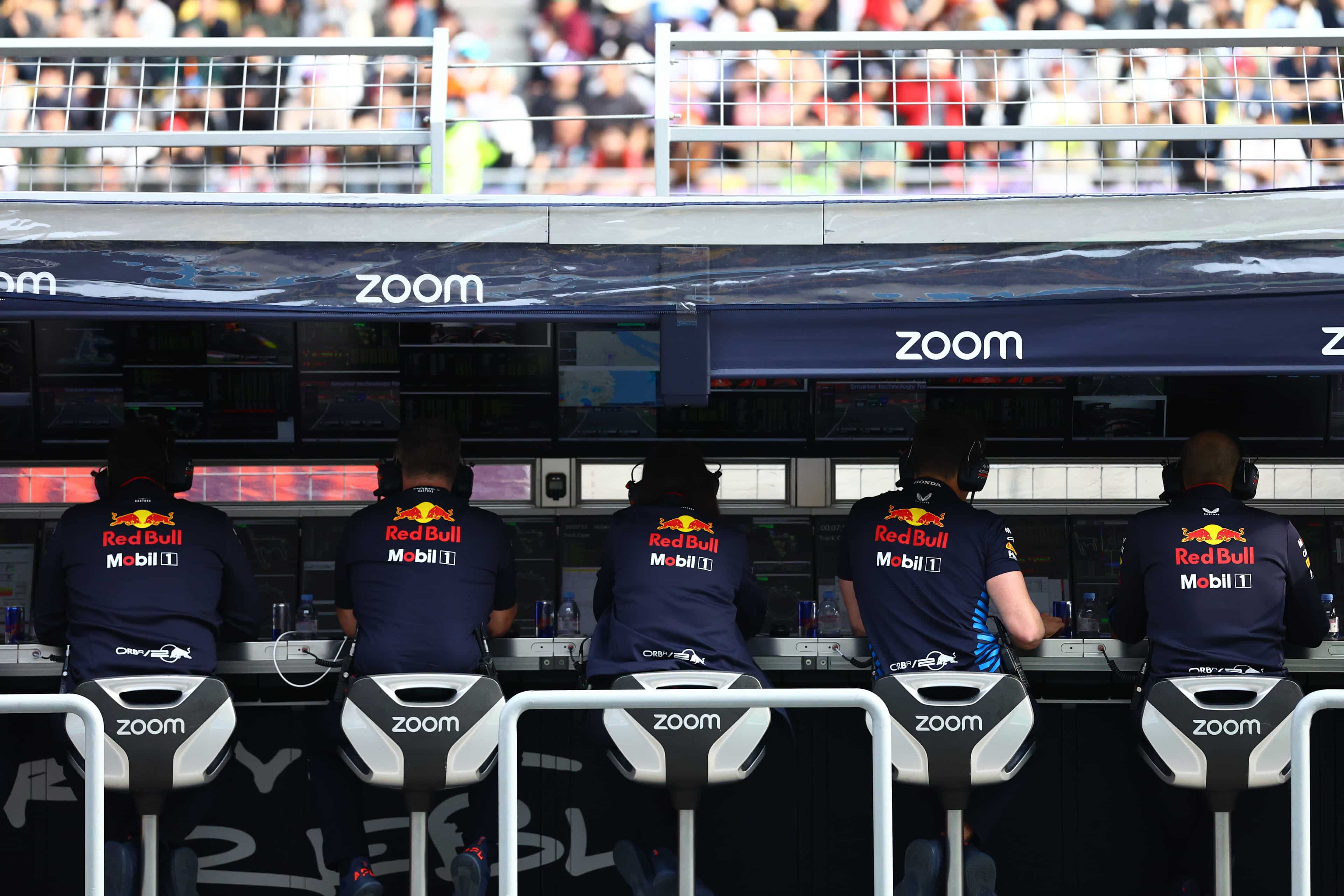
In Formula 1, the outcome of a race is determined by two factors: track conditions and driver calibration.
Championship teams obsess over track conditions—temperature, grip levels, weather patterns, tire degradation rates. But they equally obsess over driver-car fit. Does this driver's style match this car's characteristics? Is their operating window aligned with what the machinery demands?
Put the wrong driver in the wrong conditions—even a world champion—and they'll be midfield. The talent is identical. The match is wrong.
Leadership works the same way.
An executive who excels in one organizational context may fail in another—not because their capabilities change, but because the conditions do, or because their calibration doesn't match what those conditions demand. The CFO who transformed a mature public company may flounder at a Series B startup. The COO who thrived under a delegating founder may suffocate under one who can't let go. The CRO calibrated for 5-year enterprise sales cycles may struggle in a company needing 90-day velocity.
The Race Conditions Model™ diagnoses both sides of this equation: the organizational conditions that determine whether leadership can succeed, and the executive calibration that determines whether this specific leader will succeed in these specific conditions.
The Six Conditions That Determine Leadership Success
Over two decades of placements across two markets, I've identified six diagnostic lenses that consistently predict whether leadership decisions succeed or fail. The first five examine organizational conditions. The sixth examines executive calibration. Together, they answer the fundamental question: Is there a match?
Condition 1: Founder Phase
The Founder's Paradox™
Diagnostic question: Where is the founder in their evolution—asset or bottleneck?
The same instincts that created the company eventually constrain it. A board recruits a C-suite executive to "professionalize" operations—but the founder, despite agreeing in principle, cannot actually relinquish control. The executive fails. The search restarts. And no one diagnoses the real problem: the founder hasn't evolved.
What it reveals: Whether the founder's presence accelerates or constrains the organization's trajectory. Whether their stated intentions align with their actual behavior.
Condition 2: Track Surface
The Tire Compound Strategy™
Diagnostic question: What kind of race is this organization running—sprint, endurance, turnaround, or institutionalization?
Executives are calibrated—by experience, temperament, and the environments that shaped them—for specific organizational contexts. A turnaround specialist who thrives in chaos may grow restless in a stable business. A scale-up operator who excels at 100-to-500 employee transitions may struggle at 20-to-100. Organizations hire based on credentials without asking whether the executive's operating tempo matches the company's current demands.
What it reveals: The durability and speed-to-impact profile required for any leadership role in this specific environment.
Condition 3: Boundary Architecture
The Track Limits Principle™
Diagnostic question: Are the rules of engagement clear enough for leaders to perform at the edge?
Authority is described in job descriptions but renegotiated daily in practice. Decision rights exist on paper but dissolve when tested. Without clarity, executives either overreach—crossing invisible lines that trigger resistance—or underperform—playing it safe because they cannot map the boundaries. Both outcomes destroy the value they were hired to create.
What it reveals: Whether incoming executives will have the clarity needed to make bold decisions—or will be paralyzed by ambiguity.
Condition 4: Transition Readiness
The Stewardship Protocol™
Diagnostic question: Is this organization prepared to evolve beyond its current leadership?
A new executive must navigate existing relationships, absorb institutional knowledge, build credibility, and deliver results—often simultaneously. Organizations that prepare for this transition dramatically increase the probability of success. Organizations that don't treat the new hire as a plug-in replacement, expecting immediate performance without investment in integration.
What it reveals: Whether the stakeholder environment, cultural conditions, and structural supports exist for a leadership transition to succeed.
Condition 5: Governance Reality
The Director Telemetry™
Diagnostic question: What's actually happening at the board level beneath the credentials?
Most organizations assess directors based on credentials—titles, board seats, industry experience—without examining what actually happens in the boardroom. A board of former Fortune 500 CEOs can still be dysfunctional. The gap between governance appearance and governance reality is where executive careers go to die.
What it reveals: The hidden dynamics, capabilities, and dysfunction that will shape any executive's ability to succeed.
Condition 6: Executive Calibration
The Driver Calibration™
Diagnostic question: Is this executive's operating configuration aligned with what these conditions actually demand?
Most searches evaluate credentials without understanding calibration—the invisible operating parameters that determine whether an executive will thrive or struggle in specific conditions. Two executives with identical résumés can have fundamentally different calibrations: different operating horizons, different complexity bandwidths, different trajectories. One may achieve flow in your conditions; the other may redline within months.
What it reveals: Whether an executive's natural operating horizon, complexity bandwidth, and current state match what your specific organizational conditions require—not just whether they're talented, but whether they're configured for this role.
How Conditions and Calibration Compound
These six diagnostics don't operate in isolation. They interact and amplify each other in ways that make comprehensive diagnosis essential.
Consider: a founder in the wrong phase, plus unclear boundaries, plus a mismatched executive calibration. The founder says they're ready to step back. A COO is hired from a larger company—someone with an Era Horizon calibration, wired for 5-10 year strategic arcs. But the role's actual scope is Race Horizon—1-2 year operational cycles. The boundaries of authority are never clearly defined. Within months, the COO is either openly conflicting with the founder or quietly disengaging.
Any single mismatch might have been manageable. Together, they guarantee failure.
Or consider: perfect organizational conditions, but wrong executive calibration. The company has evolved past founder dependence. The board is mature. The boundaries are clear. The transition has been prepared. But the executive they hire is calibrated for narrow complexity bandwidth in a role demanding wide bandwidth. The conditions were right. The calibration was wrong. Failure follows.
This is why condition diagnosis AND calibration assessment must precede candidate evaluation. The question isn't "Who is the best CFO available?" The question is "What conditions exist here, what calibration do those conditions require, and which executives match both?"
The Complete Diagnostic
The Race Conditions Model™ now offers complete diagnostic capability:
Diagnostic | Question |
Founder Phase | Is the founder accelerating or constraining? |
Track Surface | What organizational tempo does this role require? |
Boundary Architecture | Is there enough clarity for bold decision-making? |
Transition Readiness | Is the organization prepared to receive new leadership? |
Governance Reality | What's actually happening at board level? |
Executive Calibration | Is this candidate configured for these specific conditions? |
The first five diagnose the track. The sixth diagnoses the driver. Only when both align can leadership succeed.
The Difference That Complete Diagnosis Makes
Organizations that diagnose both conditions and calibration before making leadership decisions experience fewer failed hires, faster executive integration, and better returns on their search investments. Organizations that don't—that hire for credentials while ignoring conditions and calibration—repeat the same failures with different names.
Championship teams don't guess conditions or driver-car fit. They diagnose them, adapt to them, and make strategic decisions accordingly.
Before I make any leadership placement, I diagnose all six conditions. Most searches fail not because of talent, but because no one read the race conditions—or the driver calibration—first.
The talent is rarely the problem. The match usually is.
Stop Diagnosing Talent. Start Diagnosing Conditions.
Before your next executive search, understand the five conditions that determine whether leadership decisions succeed or fail. A 30-minute diagnostic conversation can reveal what months of interviews won't.
Schedule a Diagnostic Conversation