When the Pit Wall Goes Silent: Executive Decision-Making Under Uncertainty
January 18, 2026
The CFO Who Can’t Fundraise: Series B’s Most Expensive Mistake
January 23, 2026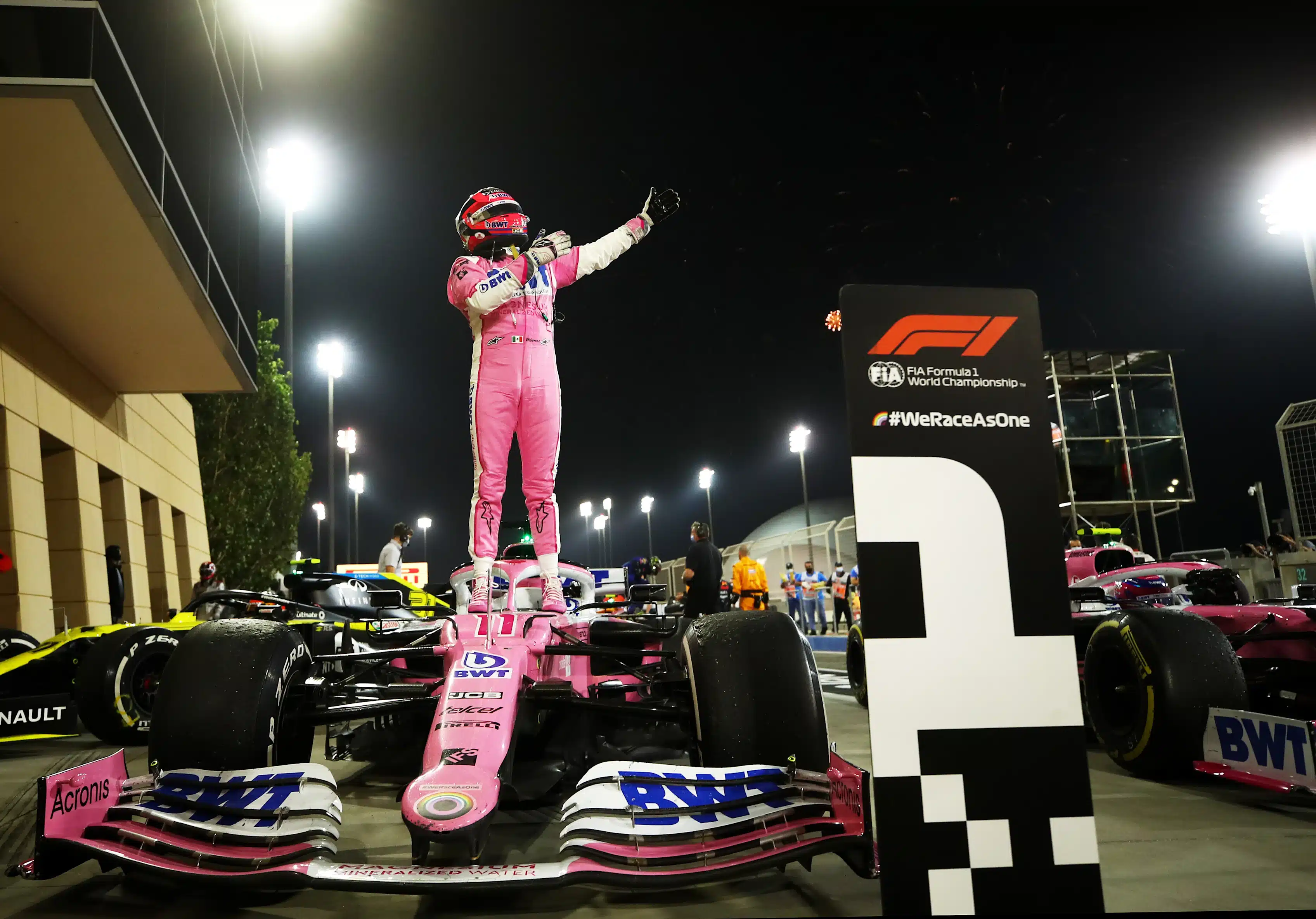
The Tire Whisperer: Executives Who Extract Performance from Constrained Conditions
Lap one of the 2020 Sakhir Grand Prix. Sergio Perez's Racing Point is facing the wrong direction.
Charles Leclerc has just clipped him at Turn 4, spinning Perez around and dropping him from second place to dead last. The Mexican driver watches the entire field disappear into the Bahrain night. His race, by any reasonable assessment, is over.
Except Perez doesn't see it that way.
He pits immediately, takes fresh tires, and begins the long climb back through the field. One by one, the overtakes stick. The midfield melts in his mirrors. By lap 47, he's in the lead. By lap 87, he's crossing the finish line first, his maiden Formula 1 victory after 190 starts, completing one of the most remarkable last-to-first drives in the sport's history.
The broadcast commentary focused on the drama. The pit wall replays showed the strategy. But what made the drive possible was something less visible: Perez's preternatural ability to extract performance from tires that should have been finished.
"Sergio's tire management is second to none," his technical director, Andrew Green, observed. "It's like he has built-in traction control."
I've spent two decades watching executives navigate constrained conditions. The ones who succeed share something with Perez: they don't just survive constraints. They extract performance that others can't see.
The Skill Nobody Teaches
Here's what most organizations get wrong about hiring for difficult conditions: they look for executives who have succeeded in well-resourced environments and assume that success will transfer.
It rarely does.
The skills that produce results with adequate resources are fundamentally different from the skills that produce results without them. An executive who thrived at a Fortune 500 with unlimited budget, established processes, and deep talent benches may flounder completely when those supports disappear. Not because they lack intelligence or work ethic, but because their calibration doesn't match the conditions.
Tire whisperers are different. They've developed a sensitivity to constraints that others never acquire. They know how to preserve resources when others burn through them. They find grip where the data says none exists.
Jenson Button built an entire championship on this capability. His 2009 World Championship with Brawn GP wasn't won through raw aggression or superior machinery alone. It was won through a driving style so smooth that he preserved his tires long after competitors had destroyed theirs.
"By keeping his tires alive longer," analysts noted, "Button could run flexible strategies, defend track position without falling off a performance cliff and attack late in stints when others were forced to back off."
Button's advantage wasn't speed. It was efficiency. He turned tire management into a quiet but decisive weapon, winning six of the first seven races not by being faster, but by being smarter about resource consumption.
The executive equivalent is the leader who stretches a constrained budget further than anyone thought possible. Who builds capability with a skeleton crew. Who finds creative paths when conventional ones are blocked by resource limitations.
Where the Capability Comes From
The most striking thing about tire whisperers is where they learned the skill: usually in environments where they had no choice.
Fernando Alonso's family couldn't afford rain tires during his karting years. So young Fernando learned to navigate wet tracks on slick compounds, tires completely unsuited to the conditions. That early constraint forced him to develop a sensitivity to grip that drivers with proper equipment never needed.
The pattern holds across every tire whisperer I've studied. Perez credited his aptitude to the demands of GP2, where tire management separated survivors from also-rans. Button traced his smooth style to karting with underpowered engines, where maintaining momentum through corners was the only path to competitiveness.
They didn't learn tire management because someone taught them a technique. They learned it because the alternative was failure.
The same dynamic applies to executives. The leaders who excel in constrained conditions almost always developed that capability through necessity, not choice. They ran divisions that corporate had written off. They managed departments with frozen budgets while expectations kept rising. They built startups where every dollar had to produce returns because there were no more dollars coming.
This creates a hiring paradox. The executives with the most impressive resumes, the ones from well-funded companies with robust support structures, are often the least prepared for resource-constrained environments. Their success was real, but it was enabled by conditions that won't exist in your turnaround situation, your bootstrapped startup, or your PE portfolio company with eighteen months to show results.
Reading the Capability Before You Hire
The 2012 Malaysian Grand Prix was a masterclass in tire whispering under pressure.
Conditions were brutal, a wet-dry race with constantly evolving grip levels. Sergio Perez, in only his second F1 season, started ninth in an uncompetitive Sauber. By the closing laps, he was hunting down Fernando Alonso for the victory.
"What surprised me most," Sauber's team principal said afterward, "was the fact that he was very competitive in all conditions and with all tyres. Whether they were wet, intermediate, or dry tires, he was always one of the fastest drivers on track, if not the fastest."
Perez ultimately finished second, 2.2 seconds behind Alonso. But the performance announced something important: here was a driver whose skills specifically suited difficult, evolving, under-resourced conditions.
The question for executive hiring is how to identify this capability before the constraints arrive.
First, look for evidence of asymmetric results. Tire whisperers produce outcomes that exceed what their resources should allow. They finished fourth in the championship with the seventh-best car. They grew revenue 40% with a team half the size of their competitors. They shipped the product on time despite losing three key engineers mid-project. The specifics vary, but the pattern is consistent: results that don't match the inputs.
Second, examine how they talk about constraints. Executives calibrated for well-resourced environments tend to frame constraints as problems to be solved through additional resources. Tire whisperers frame constraints as parameters to be optimized within. Listen for language like "we found a way to..." versus "if only we had..." The framing reveals the calibration.
Third, probe their decision-making under resource pressure. When the budget was cut, what did they protect and what did they sacrifice? When the timeline compressed, how did they adjust scope, quality versus team capacity? Tire whisperers make these tradeoffs with unusual clarity. They know instinctively which resources are load-bearing and which are nice-to-have.
Fourth, understand where they learned the skill. Did they develop in environments that punished resource waste? Have they ever operated without a safety net? The executives who learned constraint management at McKinsey, with unlimited analyst support and partner air cover, have a different calibration than executives who learned it running a family business through a recession.
The Force India Pattern
Force India offers a case study in what tire whisperers can accomplish in organizational contexts.
The team operated on one of the smallest budgets in Formula 1, roughly a third of what front-running teams spent. By any reasonable analysis, they should have been permanent backmarkers, fighting to avoid last place.
Instead, they finished fourth in the Constructors' Championship in both 2016 and 2017. Sergio Perez delivered multiple podiums. The team consistently outperformed Williams, Renault, and other better-funded competitors.
How? Not through some strategic breakthrough or technical innovation. Through relentless efficiency. Every dollar had to produce maximum return. Every decision had to account for resource constraints. The organization developed a culture of extraction, getting more from less because there was no alternative.
When Force India finally collapsed under financial pressure in 2018, observers noted the irony: the team had been operating miracles with inadequate resources for years. The constraints eventually became insurmountable, but the capability they'd developed was real.
The organizational lesson is clear. In constrained conditions, you don't need executives calibrated for abundance. You need executives calibrated for scarcity, leaders who treat resource efficiency not as a temporary hardship but as a permanent operating principle.
What Tire Whisperers Actually Do Differently
The technical explanation for tire whispering is straightforward: smooth inputs, progressive loading, and minimizing the scrubbing and overheating that accelerate degradation. The translation to executive leadership is equally clear.
Tire whisperers avoid sudden movements. In organizational terms, this means they don't lurch from priority to priority, burning resources on abandoned initiatives. They commit to directions and stay committed, knowing that constant pivoting wastes the scarcest resource of all: team energy and focus.
They load resources progressively. Rather than throwing everything at a problem immediately, they ramp up investment as they gather information. This preserves optionality when outcomes are uncertain, exactly the conditions where constrained organizations operate.
They monitor degradation constantly. Tire whisperers know the moment their resources start failing, often before any external indicator shows the problem. In organizations, this translates into acute sensitivity to team burnout, process breakdowns, and capability gaps. They catch problems early because they're paying attention.
They adjust rather than push through. When a tire starts losing grip, the whisperer changes their approach rather than demanding more from depleted resources. Executives with this calibration recognize when to shift strategy rather than grinding their teams into dust by pursuing a plan that no longer supports their current conditions.
Most importantly, they find performance that others don't believe exists. Perez routinely extracts pace from tires that telemetry suggests are finished. Button found a grip in degraded rubber, which made his strategists reconsider everything they knew about wear curves. The executive equivalent is the leader who delivers results from teams that HR has written off, budgets that finance has declared inadequate, and timelines that operations has deemed impossible.
The Constraint Advantage
Here's the uncomfortable truth about tire whispering: it's not just a survival skill. It's often a competitive advantage.
In the 2011 Canadian Grand Prix, Jenson Button made six pit stops, a record for a race winner, and still won. His tire management allowed strategic flexibility that other drivers couldn't match. He could take risks that would have stranded others.
The organizational parallel is the resource-efficient company that can pursue opportunities well-funded competitors can't justify. The turnaround executive who can make bets that conventional analysis rejects. The startup that can extend runway long enough to find product-market fit while better-capitalized competitors burn through their reserves.
When you hire a tire whisperer for constrained conditions, you're not just hiring someone who can survive the limitations. You're hiring someone who can turn those limitations into advantages finding competitive space precisely because others assume it doesn't exist.
The Diagnostic Questions
If you're hiring for resource-constrained conditions, these questions reveal calibration:
- Walk me through a time when you delivered results that exceeded what your resources should have allowed. What specifically enabled that outcome?
- When you've faced budget cuts or headcount reductions, how have you decided what to protect versus sacrifice?
- Describe your approach to managing team energy and focus when timelines are extended and outcomes are uncertain.
- Tell me about a situation where conventional analysis said something was impossible, but you found a way to make it happen.
The answers reveal whether you're talking to someone who needs abundant resources to perform, or someone who finds performance where others see only constraints.
The Quiet Advantage
Sergio Perez spent years at Force India before Red Bull signed him. During that time, he delivered podiums from a car that had no business being there. He extracted results that the budget didn't justify.
When Red Bull needed a driver who could support their championship campaign while managing tires in ways that complemented Max Verstappen's aggressive style, they knew exactly who to call. Perez's years of constraint had prepared him for opportunity.
The executives who develop tire-whispering capability follow the same arc. The constraint years feel limiting, but they're building calibration that well-resourced competitors never develop. When conditions tighten across entire industries, economic downturns, market disruptions, and capital contractions, the tire whisperers suddenly hold the advantage.
The question isn't whether your organization will face resource constraints. It will.
The question is whether you've hired leaders calibrated to extract performance when those constraints arrive.
Hiring for resource-constrained conditions?
Turnarounds, portfolio companies with compressed timelines, startups with limited runway—these conditions require executives calibrated for scarcity, not abundance. If you need leaders who extract performance where others see only constraints, let's talk about how to identify the calibration that actually matters.
Schedule a ConversationFrequently Asked Questions
What is a "tire whisperer" in executive leadership? ›
A tire whisperer is an executive who excels at extracting performance from constrained conditions—limited budgets, skeleton crews, compressed timelines, or inadequate resources. Like F1 drivers who preserve tires far beyond expected degradation, these leaders find results where conventional analysis says none should exist. They're calibrated for scarcity rather than abundance.
Why do executives from well-resourced companies often fail in constrained environments? ›
Success in well-resourced environments develops different skills than success in constrained ones. Executives who thrived with unlimited budgets, established processes, and deep talent benches may lack the efficiency mindset, resource sensitivity, and creative problem-solving that constraint management requires. Their calibration doesn't match the conditions—not because they lack capability, but because they developed capability for different circumstances.
How do you identify executives calibrated for resource-constrained conditions? ›
Look for four indicators: asymmetric results (outcomes exceeding what resources should allow), constraint framing (treating limitations as parameters to optimize rather than problems requiring more resources), clear tradeoff decision-making (knowing what to protect versus sacrifice under pressure), and developmental history (learning efficiency through necessity in under-resourced environments rather than abundance).
What do tire whisperers do differently in organizations? ›
They avoid sudden strategic movements that waste resources on abandoned initiatives. They load resources progressively, ramping up investment as information improves. They monitor degradation constantly, catching team burnout and capability gaps early. They adjust approach rather than grinding teams into dust. Most importantly, they find performance where others see only constraints.
Can resource efficiency become a competitive advantage? ›
Absolutely. Tire whisperers don't just survive constraints—they turn them into competitive space. Resource-efficient organizations can pursue opportunities that well-funded competitors can't justify, extend runway to find product-market fit, and make bets that conventional analysis rejects. When conditions tighten industry-wide, leaders calibrated for scarcity hold the advantage.