Executive Search Archives - Page 8 of 14 - Charlie Solórzano | The Race Conditions Model™ | U.S.-Mexico Executive Search
January 19, 2026
F1 tire showing wear patterns, representing the balance between performance extraction and resource preservation that defines executive leadership in constrained conditions

The Tire Whisperer: Executives Who Excel in Resource-Constrained Conditions

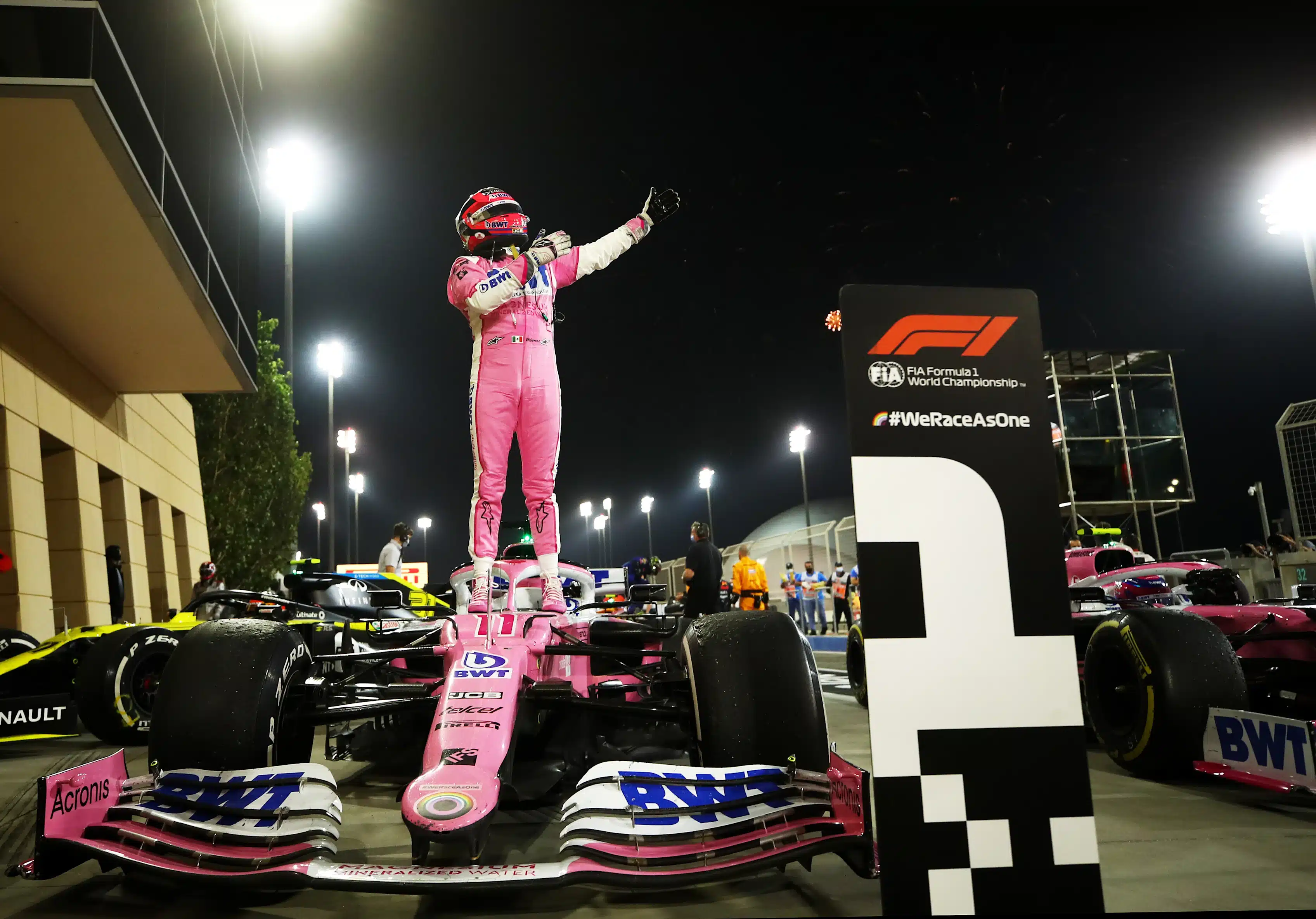
Sergio Perez's 2020 Sakhir Grand Prix victory—from last place to first after a lap-one collision—wasn't just dramatic racing. It demonstrated a capability that separates certain executives from the rest: the ability to extract performance from conditions where conventional analysis says none should exist. Drawing from F1's greatest tire managers (Perez, Button, Alonso), this article explores why executives from well-resourced environments often fail when constraints arrive, how to identify leaders calibrated for scarcity rather than abundance, and why resource efficiency can become competitive advantage. The executives who master this capability don't just survive constrained conditions—they turn constraints into competitive space others can't access.
January 23, 2026
Visual comparison of CFO types showing financial steward versus capital raising CFO skills for Series B startup fundraising

The CFO Who Can’t Fundraise: Series B’s Most Expensive Mistake

Your new CFO has impeccable credentials. Twenty years at a Fortune 500 company. CPA. MBA from a top program. Six months in, your books are pristine and your controls are bulletproof. There's just one problem: you're heading into Series B and she freezes in front of investors. I see this pattern constantly. The board hires for financial stewardship when they actually need capital markets leadership. They get a brilliant controller in a CFO costume. These are fundamentally different skill sets. Ferrari lost a championship learning this lesson with Mattia Binotto. McLaren won consecutive titles because Zak Brown understood that commercial leadership and technical leadership require different people. Your Series B needs a CFO who can raise capital, not just count it.
January 26, 2026
Organizational chart showing hollow middle management layer between C-suite executives and individual contributors in Series B startup

The Middle Management Void: Why Your Series B Is Stalling

our CFO spent three hours yesterday reconciling expense reports. Your VP of Engineering is personally reviewing every pull request. Your CTO is troubleshooting a customer's API integration. Welcome to Series B, where your C-suite has become the world's most overqualified middle management team. I see this pattern constantly in growth-stage companies. The org chart looks impressive. Strong executives at the top. Talented individual contributors doing the work. But between them? A hollow layer where directors and senior managers should be. McKinsey research shows investors attribute 65 percent of portfolio company failures to people and organizational issues. The most common structural failure? The missing middle. McLaren F1 spent half a decade learning this lesson the expensive way before restructuring their technical leadership. Your Series B doesn't have that kind of time.
January 27, 2026
Mexico manufacturing facility with unfilled executive positions representing the nearshoring leadership gap

Manufacturing’s Leadership Vacuum: Nearshoring’s Hidden Crisis

Nearshoring isn't constrained by capital—it's constrained by leadership throughput. Leadership development operates on a five-to-ten year lag while capital deployment operates on eighteen months. The mismatch is structural. Here's why factories scale faster than the organizations built to run them.
January 27, 2026
F1 pre-season testing versus race day illustrating the difference between exploration and optimization phases

The Optimization Trap: When Speed Becomes Sabotage

F1 is running three pre-season tests for 2026 because nobody knows how the new cars will behave. They refused to measure performance before understanding the system. Most organizations skip this step entirely — rushing to optimization before exploration, then blaming talent when results don't follow. Here's what that actually costs.
January 28, 2026
VP Sales in chaotic founder-era conditions versus a structured, scalable sales environment

Why Your VP Sales Failed: The Setup Nobody Names

Most VP of Sales failures aren't talent failures — they're organizational failures wearing a human face. The founder succeeded despite the lack of systems. The VP Sales cannot succeed without them. Here are the four conditions that guarantee failure, and what to fix before your next hire.
January 30, 2026
Tire compound spectrum applied to cross-border executive selection between US and Mexico markets

Cross-Border Compounds: Executive Search for US-Mexico

Cross-border expansion is a C3 problem masquerading as a C5 opportunity. U.S. markets reward velocity; Mexican markets reward relationships. Here's how to match executive compounds to market conditions — and the compounding cost when you get it wrong.
February 2, 2026
F1 practice session versus race day conditions illustrating the assessment mismatch in executive hiring

The Friday Driver Dilemma: When Interviews Predict Nothing

Practice conditions don't predict race performance. Interview conditions don't predict job performance. Here's why even brilliant interview performances tell you almost nothing about how an executive will operate when strategy collides with reality—and how to design assessments that measure what actually matters.
February 3, 2026
Deal memo with extensive financial analysis and minimal human capital due diligence

Due Diligence on People: The Missing Chapter in Deals

Deal memos are exhaustive on financials and superficial on people. Human capital miscalibration should be modeled like integration risk — with probability, impact, and mitigation cost. Here's the missing chapter that determines whether your returns are real or overstated.
February 4, 2026
CEO receiving filtered information while organizational reality diverges from perceived conditions

The Chief of Staff Paradox: Leverage or Liability?

Your Chief of Staff makes you more productive. Are they making you more effective? A CoS can deliver productivity while destroying effectiveness, and most CEOs won't notice until the damage is done. Here's how to design the role for leverage, not liability.
February 6, 2026
Formula 1 pit crew changing tires during a race, illustrating how startup teams must evolve as conditions change

The Founder-Friendly Trap: When Loyalty Hurts Business

The people who built your company are not always the people who can scale it. Founders know this. Boards suspect it. Early employees feel it. And everyone keeps pretending because the alternative feels like betrayal. This article names the loyalty tax that scaling startups pay when founders confuse gratitude with governance, and explains why being truly "founder-friendly" to the business sometimes means making the hardest call about the people who got you here.
February 7, 2026
Three boardroom chairs casting distinctly different shadows, representing three CHRO failure modes: compliance calibration, strategy without execution, and comfort promotion

Why Most CHRO Searches Fail Before They Start

CHRO searches fail not because companies hire bad candidates. They fail because companies don't know what they're hiring for. The board remembers the HR executive who handled compliance. The CEO wants a strategic thought partner but can't articulate what that means. The search committee evaluates candidates against criteria that don't predict success in the actual role. The solution isn't more thorough interviews. It's clarity about what the role actually requires at this specific company at this specific moment, before the search begins.