Sports Media Executive Search: The Hybrid Gap
July 1, 2026
First Board Seat: Why Accomplished Executives Miss
July 6, 2026
Sports Leadership Assessment: Driver Calibration
The Driver Calibration: What Formula 1 Taught Me About Sports Executive Search
More than 40 years of watching Formula 1 has taught me one thing: the fastest driver doesn't always win. The one who reads the conditions does.
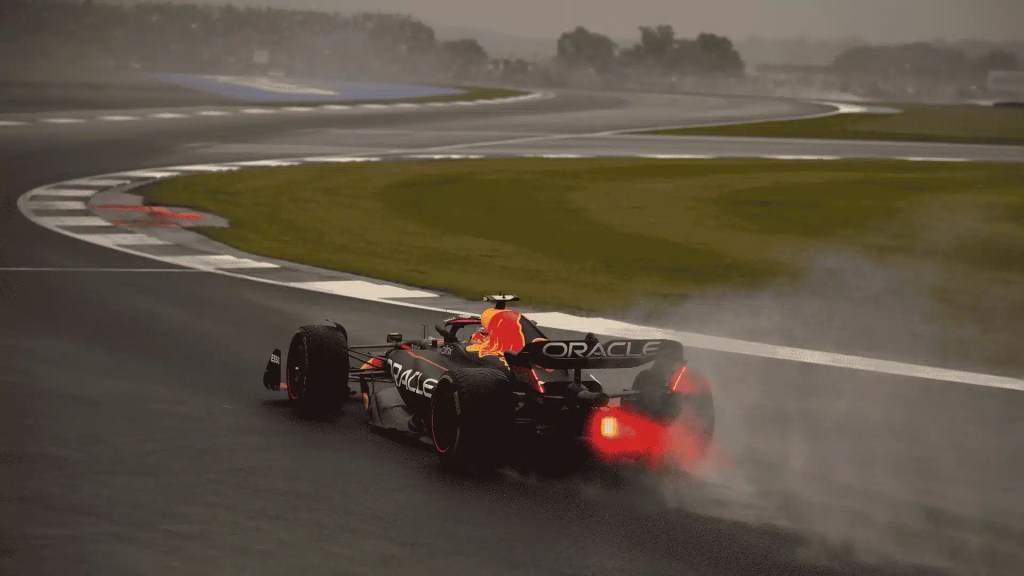
I learned this the way most important lessons arrive, slowly, then all at once. As a teenager in Mexico, I watched Ayrton Senna navigate the 1993 European Grand Prix at Donington Park in the rain. What made that drive extraordinary wasn't Senna's raw speed. It was his ability to read the conditions, the water on the track, the grip at each corner, the way the rain was moving across the circuit, and recalibrate in real time while drivers around him spun, crashed, or simply slowed because they couldn't process the changing information fast enough.
I didn't know it at the time, but I was watching the framework that would define my career.
Years later, I would see the same pattern in boardrooms: the most impressive candidate was not always the right one. The right one was the leader calibrated for the conditions.
I am a former athlete, but I did not grow up inside a front office. That’s not the claim. But I am an executive search consultant who has spent almost twenty years placing senior leaders into complex organizations, and forty years studying Formula 1 with the kind of obsessive, analytical attention most people reserve for their actual profession.
Those two tracks eventually merged.
Formula 1 is not a metaphor. It is a diagnostic framework.
F1 taught me to read performance as the interaction between the individual, the system, and the conditions. Executive search taught me that most hiring mistakes happen when organizations confuse one of those for the other.
That is why I am building a sports executive search practice. Not because sports needs another insider with a contact list. Because sports is entering a period of structural transformation, driven by private equity, the global expansion of women's sports, the current FIFA World Cup in North America, the restructuring of college athletics, and Middle Eastern capital entering leagues and franchises, and a period where the next generation of leaders may not come from the obvious places. And assessing them requires a different lens.
Sports does not just need people who have worked in sports. It needs leaders calibrated for the conditions sports is entering into.
That distinction is the practice.
The Lesson: Performance Is Contextual
The first thing F1 teaches you, the thing that takes years to internalize because it contradicts most sports coverage, is that individual talent explains less about outcomes than most people believe.
Max Verstappen is, by any reasonable assessment, the most talented driver of his generation. His four consecutive World Championships resulted from his talent being deployed within a system, Red Bull Racing, calibrated to amplify his specific capabilities. The car, the strategy, the engineering, the culture, the organizational structure, every element extracted maximum performance from what he does best.
Put Verstappen in a backmarker car, and the outcome changes. Not because his talent disappears. Because talent expresses itself through conditions.
Performance is not a property of the individual. It is a property of the interaction between the individual and the conditions.
This is the most important observation for executive search in sports or in any industry. The CFO who transformed a PE-backed media company will not automatically transform a PE-backed sports franchise, because the conditions are different. The salary cap, the luxury tax, the media rights cycle, the emotional intensity of a fan base, the political dynamics of a league office, these conditions shape executive performance as fundamentally as the car shapes the driver's lap time.
The resume tells you where the executive has won. It does not tell you whether the conditions that made them effective exist here.
Performance doesn't transfer. Calibration does.
What F1 Trains You to See
After forty years, you stop watching the race the way casual fans watch it. You stop seeing only the driver. You start seeing the system that made the lap possible.
This shift in perspective is not incidental to how I work. It is the method.
Watch the system, not the star.
Sports media centers on the individual, the podium ceremony, the post-race interview, and the championship celebration. But watch carefully, and you see something different: the team behind the result. The engineers who designed the car. The strategist who called the pit stop at exactly the right moment. The race engineer whose relationship with the driver allows a three-word radio message to communicate a complete tactical adjustment. The team principal who built the culture that lets all of these people perform simultaneously at their peak.
Star power is visible. System quality is predictive.
This is what I see when I assess a sports organization's leadership needs. I don't start with the candidate, the resume, or the championship record. I start with the system: the conditions, team dynamics, strategic infrastructure, and cultural environment in which the new leader will operate. The system determines whether the individual's talent is amplified or wasted.
The franchise that hires a transformational CRO and drops her into an organization with no data infrastructure, no marketing technology stack, and a culture that has never been accountable to commercial metrics will watch her struggle, not because she lacks talent, but because the system isn't built for what she does.
Read conditions, not credentials.
Credentials tell you what someone has done. They don't tell you what someone will do in conditions they haven't faced.
In executive search, the "rain" is organizational complexity, conditions that are unfamiliar, ambiguous, and rapidly changing. The PE sponsor who just acquired a franchise. The women's sports league building from scratch. The athletic department navigating a legal restructuring. The franchise managing a media rights transition while simultaneously running a stadium renovation and a coaching change.
Credentials are lap times. Conditions are telemetry.
The executive who has succeeded in stable conditions and delivered within an established organization with a defined playbook may have no capacity to handle organizational complexity. Her track record tells you she excels in the dry. It tells you nothing about the rain.
Notice the decisions nobody sees.
The race the casual viewer watches is the one on the screen. The race that determines the outcome is happening in the data: the tire degradation model, the weather forecast that shifts strategy three laps before anyone else reacts.
The same is true in organizations. The CFO who restructured the reporting cadence before the board asked. The COO, who noticed the incentive structure was optimizing for ticket volume rather than per-seat revenue, quietly redesigned it. The CHRO who identified that the organization's best commercial talent was being systematically underpaid and built the retention case before anyone resigned.
These invisible decisions compound. Over two years, they produce more organizational value than any single headline decision.
I do not ask about the biggest win first. I ask about the signal they saw before anyone else did.
The Driver Calibration™
The Driver Calibration™ assesses whether a leader's capabilities match the specific conditions of the team, league, ownership group, market, and moment they are entering.
The name comes from the F1 practice of calibrating the car's setup to each circuit. A setup that works at Monza fails at Monaco. Same car. Different circuit. Different demands.
Same executive. Different ownership structure. Different market. Different result.
The framework evaluates candidates across three dimensions that traditional search processes either underweight or ignore.
Condition Reading. The ability to map an organizational environment rapidly and accurately, to understand within weeks where the real leverage points are, what the organization needs that it doesn't know it needs, and what constraints are invisible on the org chart.
The candidate who maps decision rights, power centers, incentives, hidden dependencies, and structural constraints before prescribing a plan is demonstrating condition reading. The candidate who arrives with a pre-built playbook is demonstrating pattern repetition. Playbooks work when the conditions match. Condition readers work in every environment.
Adaptive Capacity. The ability to change approach when conditions change — to abandon a strategy that isn't producing results and build a new one without losing organizational confidence or personal equilibrium.
Some leaders adapt. Others simply apply more force to a failing plan.
In sports organizations, where conditions shift with every season, every coaching change, every media rights cycle, and every ownership transition, adaptive capacity is the difference between a two-year executive and a ten-year executive.
System Thinking. The ability to see the organization as a system, not a collection of functions, to understand how a decision in sponsorship affects media, how a decision in operations affects fan experience, and how a decision in finance affects talent retention.
Functional thinkers solve the visible problems one at a time. Systems thinkers see the collisions before they happen.
When I present a candidate with a cross-functional scenario, a franchise simultaneously negotiating a media rights deal, managing a stadium development, and restructuring front-office compensation, the functional thinker addresses each challenge separately. The systems thinker describes how the three initiatives interact: how the media deal affects stadium financing, how the stadium timeline affects compensation, and how compensation affects the talent needed to execute the media deal.
That distinction is what I am looking for.
My Lane
Sports search often defaults to two familiar patterns: industry insiders who know the room, and generalist firms learning the room from the outside. Both can be useful. Neither is enough when the leadership needs sit outside the traditional sports pipeline.
My lane is adjacent-talent calibration.
I am not trying to out-insider the insiders. I am solving a specific problem: sports organizations increasingly need leaders from adjacent sectors, PE portfolios, media companies, entertainment, consumer brands, hospitality, technology, and someone has to assess whether they will actually perform in sports conditions.
The question is not whether an executive has worked in sports. The question is whether their judgment transfers to sports conditions.
The five demand waves reshaping the industry, private equity transformation, women's sports expansion, the current World Cup, college athletics restructuring, and Middle Eastern capital entering leagues and franchises are creating leadership needs that traditional sports pipelines haven't produced at scale. Sports doesn't only need people who know the industry. It needs people who can build the systems the industry now requires.
What This Means for Sports Search
In this market, sports search has to do three things differently.
First: look beyond the obvious sports resume. The next CFO, CRO, COO, or growth executive may come from PE, media, entertainment, hospitality, consumer brands, technology, or cross-border business. The title may not say "sports." The calibration may still fit, and the assessment has to be designed to see that.
Second: assess calibration, not just experience. A franchise, league, athletic department, or PE-backed ownership group is not a generic sports organization. Each has specific ownership dynamics, market pressure, fan expectations, commercial infrastructure, governance, culture, and time horizon. Those conditions decide whether the executive's talent compounds or stalls.
Third: identify builders before the market names them. Sports doesn't only need people who know the industry. It needs people who can build the systems the industry now requires, people whose titles don't yet say "sports executive" but whose calibration already fits.
That is the work. Not finding the most familiar name. Finding the leader who can read the conditions before everyone else realizes they have changed.
The mistake is easy to make.
You hire the lap time. You should have hired the driver who could read the track.
Charlie Solórzano is a Managing Partner at Alder Koten, a boutique executive search firm specializing in C-suite and board placements across the U.S. and Mexico markets. He advises founders, investors, and boards on leadership transitions using The Race Conditions Model™, a proprietary diagnostic framework built on the thesis that leadership success is determined by conditions, not credentials. He also leads the Sports Practice at both Alder Koten and IMD International Search Group, a globally coordinated executive search network operating across 26 countries.
Looking for Leaders Calibrated to Sports Conditions?
Driver Calibration™ changes how the search is designed — starting with the conditions your organization is entering, not just the credentials a candidate has accumulated.
Schedule a Confidential ConsultationFrequently Asked Questions
What is Driver Calibration™ and how does it apply to sports executive search?
Driver Calibration™ is an executive assessment framework that evaluates whether a leader's capabilities match the specific conditions of the team, league, ownership group, market, and moment they are entering. The name comes from the F1 practice of calibrating a car's setup to each circuit — the same car performs differently at Monza than at Monaco. Driver Calibration applies the same principle to executive placement: the same leader performs differently in different organizational conditions, and the search should begin with those conditions, not just the candidate's credentials.
Why do sports organizations hire the wrong executives?
Most sports hiring mistakes happen when organizations evaluate candidates based on past performance without assessing the conditions in which that performance occurred. A track record tells you where an executive has won. It doesn't tell you whether the conditions that made them effective exist in your organization. The executive who succeeded in a stable, established environment may have no capacity for the organizational complexity that sports organizations are increasingly entering — PE transformation, media rights transitions, coaching changes, stadium developments — all at once.
What is "adjacent-talent calibration" for sports organizations?
Adjacent-talent calibration is the process of assessing executives from outside the sports industry for their ability to perform in sports-specific conditions. Sports organizations increasingly need leaders from adjacent sectors — PE portfolios, media companies, entertainment, consumer brands, hospitality, technology — because traditional sports pipelines haven't produced them at the scale or profile the industry now requires. The question is not whether a candidate has worked in sports. The question is whether their judgment, adaptive capacity, and system thinking transfer to sports conditions.
How do you assess whether an executive from outside sports will succeed in a sports role?
Driver Calibration™ evaluates three dimensions that traditional search processes underweight: condition reading (the ability to map decision rights, power centers, constraints, and hidden dependencies before prescribing a plan), adaptive capacity (the ability to abandon a failing strategy and build a new one without losing organizational confidence), and system thinking (the ability to see how decisions in one function affect every other function). The candidate who demonstrates all three can succeed in sports conditions regardless of whether their previous roles were in the sports industry.
What does Formula 1 teach us about evaluating sports leadership?
Formula 1 teaches three things that apply directly to sports executive assessment. First, watch the system, not the star — star power is visible, but system quality is what predicts outcomes. Second, read conditions, not credentials — the executive who performs well in stable environments may fail in organizational complexity, just as a dry-weather driver struggles in the rain. Third, the most important decisions are the ones nobody sees — the invisible adjustments that compound over time produce more value than any single headline moment. These principles are the foundation of Driver Calibration™.