VP of Sales Assessment: The Rainmaker Trap
June 29, 2026
Sports Leadership Assessment: Driver Calibration
July 3, 2026
Sports Media Executive Search: The Hybrid Gap
The Sports Media Hybrid: The Executive that Sports Has Not Built Yet
$30.5 billion in U.S. sports media rights.
The league executives negotiating those deals were trained in broadcasting. The platforms buying those rights were built on algorithms.
That is not a media problem. It is a leadership calibration problem.
Sports have entered a hybrid media economy: broadcast, streaming, direct-to-consumer, social, betting, fantasy, data, and algorithmic discovery all operating simultaneously. The commercial architecture changed. The executive profile did not.
That gap may become the most expensive leadership problem in professional sports.
The next sports media leader is not a broadcast veteran who "gets digital." It is not a product executive who "likes sports." It is a hybrid operator who can translate between rights economics, platform strategy, product behavior, and fan monetization, simultaneously, not sequentially.
The problem is that sports has not systematically built many of them.
This is a pattern I recognize. I spend most of my time diagnosing leadership conditions in founder-led companies, cross-border expansions, and private equity-backed businesses. The presenting problem is always the same: the market changed faster than the leadership profile. The title still exists, VP of Media, Head of Broadcast Partnerships, Chief Media Officer, but the conditions around the title have been rewritten.
When that happens, the search cannot begin with a job description. It has to begin with the new operating model.
The Broadcast Executive's Blind Spot
The broadcast executive is not outdated. He is calibrated to a market where distribution was the product.
He understands rights packaging, how to structure exclusive windows, how to calculate broadcast inventory value, and how to negotiate multi-year deals that balance guaranteed fees against performance escalators. This is sophisticated work. The executives who do it well command real influence within their organizations.
What he does not understand is the buyer's new operating model.
When Amazon pays approximately $1.8 billion per year for NBA rights, it is not behaving like a traditional network with a different logo. It is using live sports to strengthen a commercial system: Prime retention, advertising, data, commerce, and platform habit. If the league negotiates that deal only through a broadcast lens, it is speaking to only part of the buyer's economics.
In the streaming era, distribution is only the front door. The product is the relationship with the fan.
The broadcast executive understands relationships, decades of trust with network executives, advertising buyers, and production partners that have produced billions in rights revenue. What he doesn't understand is that streaming doesn't just deliver content. It captures behavior. Every viewer interaction produces data that informs content strategy, advertising targeting, pricing, and audience development. The executive managing a media strategy without understanding what the data reveals is flying the aircraft without instruments.
The Sports Media Hybrid™
The next sports media executive is not a unicorn because the capabilities are mysterious. He is scarce because the capabilities were developed in separate worlds, different career trajectories, different industries, different professional cultures. The integration is what makes the profile rare.
Rights architecture across platform types. The ability to design a rights strategy that maximizes total value across broadcast, streaming, DTC, and social simultaneously, not sequentially. The question is no longer "Who gets the game?" The question is "What role does each platform play in the total fan economy?" The executive who can give ESPN the linear exclusivity it needs while giving the league's own platform the differentiated access and data that make DTC viable, that executive is designing a commercial system, not making a binary choice.
Product sensibility for DTC platforms. A DTC platform is not a digital shelf for games. It is a product with retention, habit, personalization, churn, conversion, and lifetime value. The executive who understands this thinks about the fan the way a product manager thinks about a user, because that is what the fan has become. Year-round engagement. Not just game nights.
Advertising economics in a hybrid model. Broadcast sells the moment. Streaming sells the behavior around the moment. The hybrid executive navigates both, understanding that the same sponsor may buy a broadcast spot for reach and a streaming placement for targeted attribution, and that the pricing, measurement, and value proposition for each are fundamentally different.
Competitive intelligence on platform strategy. Amazon uses sports to reduce Prime churn. Apple uses sports to build streaming credibility. Netflix uses sports to maintain subscriber growth in a maturing market. YouTube uses sports to capture the television advertising market as it migrates to digital. The best negotiator does not only knows what the buyer will pay. He knows why the buyer can justify paying it. That distinction is worth billions.
Content strategy beyond the live event. Drive to Survive did not create Formula 1. It changed who could enter the story. It turned content into audience development, and those new fans then consumed the race broadcast, the DTC platform, the live events, and the merchandise. The executive who understands this connection can design a content strategy that expands the commercial value of every other asset the league owns.
Where the Profile Is Hiding
The Sports Media Hybrid exists at the intersection of four career trajectories, and the search must span all four.
Traditional media executives who crossed into streaming early. The executive who spent a decade at ESPN or NBC Sports and then moved to Amazon, Apple, or a streaming-native platform before the transition was complete. He understands both models because he lived the transition. He negotiated broadcast deals and then built streaming products. The crossing gave him the integration that neither side alone can provide.
Technology product leaders who entered sports. The executive who built consumer-facing products at a technology company, subscription platforms, content recommendation architecture, engagement systems, and then applied that sensibility to a sports context. What he may lack is deep fluency in rights architecture and the relationship dynamics that define how deals get done.
Adjacent entertainment and media executives. Live events, music streaming, gaming, and digital media operate in conditions structurally similar to sports, seasonal content cycles, passionate audiences, hybrid distribution, and advertising and subscription revenue in tension. Executives from these worlds transfer with less friction than most search committees assume.
League and franchise operators carrying digital revenue accountability. Not every hybrid sits outside sports. Some are buried inside leagues and franchises under narrow titles: digital revenue, fan engagement, content strategy, international media, partnership strategy. They have already managed pieces of the future model. They just don't look like classic media-rights executives on paper.
The profile may not have the title yet. That is why title-based search will miss it.
The Liberty Media Principle
Liberty Media's Formula 1 transformation matters because it shows what happens when a sports property stops thinking of itself as a broadcast asset and starts thinking of itself as a media product.
Before Liberty acquired F1 in 2017, the sport's commercial model carried the logic of the broadcast era. The product was the race. The distribution was the broadcast. The audience was whoever the broadcast partner delivered. Digital access was treated as a threat to the value of rights rather than as a way to grow the fan base.
Liberty changed the architecture.
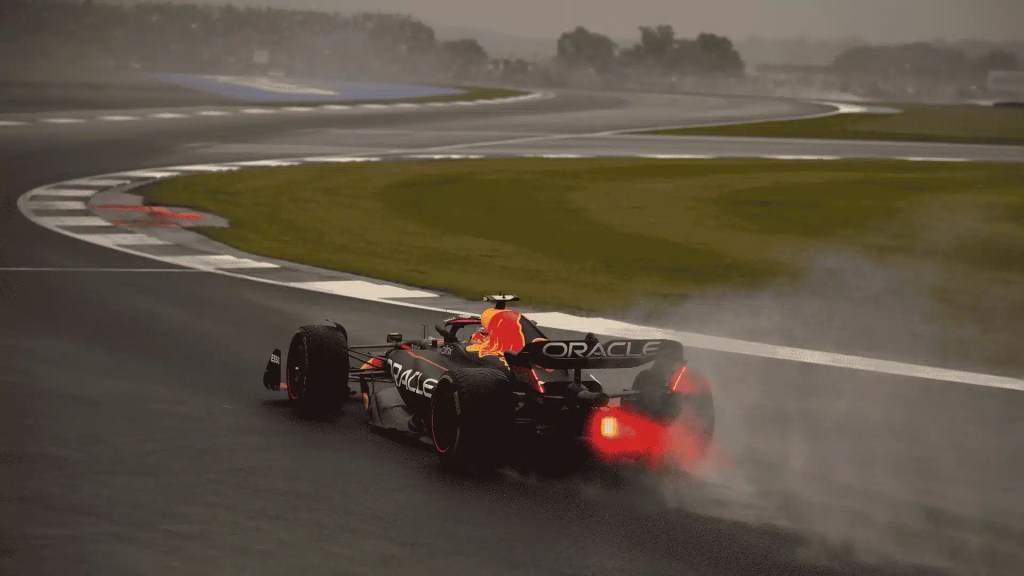
F1 TV became a direct-to-consumer product, not another distribution pipe. Drive to Survive turned storytelling into audience development. Social content became fan acquisition. Race weekends in Miami and Las Vegas became multi-day entertainment platforms rather than just race venues. By 2024, F1 revenue had roughly doubled from 2017 levels, and the global fan base reached approximately 826 million, with significant growth among younger audiences and in the United States, precisely the demographics broadcast-era F1 had failed to reach.
The leadership lesson is not "copy F1." It is that Liberty found executives who could respect the legacy broadcast economics while building product, content, digital, and live-event capabilities around them. Not a broadcast executive with a streaming vocabulary. Not a tech executive with a league credential. Leaders who could conduct the whole system.
Sports is not short on broadcast experience. It is short on executives who understand that broadcast is one instrument in the ensemble.
How I Assess the Sports Media Hybrid
I am not looking for someone who has touched every part of this model. Almost no one has. I am looking for evidence that the executive can integrate unfamiliar economics without retreating into the discipline that made them successful.
In other words, can he translate?
Hybrid rights design. I ask candidates to design a hypothetical rights structure for a league entering a new cycle. The broadcast executive presents a traditional exclusive window. The digital-native executive presents a DTC-first approach. The hybrid presents an architecture where broadcast, streaming, DTC, and social each have defined roles, and the value of each is enhanced by the structure of the others. He is designing a system.
Product thinking applied to media. I describe a league's DTC platform and ask what's wrong with it. The broadcast executive talks about content availability. The tech executive talks about the interface. The hybrid talks about engagement, why users open the app, how long they stay, what makes them return, and how the platform converts casual viewers into committed fans.
Platform motivation fluency. I ask why Amazon is paying approximately $1.8 billion per year for NBA rights. The broadcast executive says, "Because live sports drive ad revenue." The tech executive says, "Because it reduces Prime churn." The hybrid says both, and then explains how the NBA can structure the deal to serve Amazon's retention objective while extracting maximum rights value. A deal that serves the buyer's strategy is worth more than a deal that merely delivers content.
Advertising model fluency. I ask how a single sponsor should think about a blended broadcast-and-streaming buy. The hybrid can explain the trade-off between reach and precision, measurement differences, and why the blended buy creates value that neither format alone delivers. She understands both sides of the CPM.
Content strategy thinking. I ask what Drive to Survive actually changed for Formula 1, not about the show, but about the commercial architecture. The hybrid understands it was not about Netflix. It was about turning content into an audience development mechanism that fed every other revenue stream. That is the insight that separates content strategy from media operations.
Sports Media Executive Search: The Urgency
The next decade of sports media rights will not be negotiated in the same market that trained many of the executives currently responsible for them.
The risk is not that leagues fail to hire smart people. The risk is that they hire executives calibrated to the last media economy, people who will optimize for familiar metrics in a market that has fundamentally moved.
Every major league and franchise is simultaneously managing a legacy broadcast architecture that still generates the majority of revenue and a digital, DTC, and content model that will generate the majority of revenue ten years from now. The executive who can manage only one of those systems is not the wrong choice.
He is half the answer. The best sports media executive of the next decade will not simply sell rights. He will design the system that makes those rights worth more.
Charlie Solórzano is a Managing Partner at Alder Koten, a boutique executive search firm specializing in C-suite and board placements across the U.S. and Mexico markets. He advises founders, investors, and boards on leadership transitions using The Race Conditions Model™, a proprietary diagnostic framework built on the thesis that leadership success is determined by conditions, not credentials. He also leads the Sports Practice at both Alder Koten and IMD International Search Group, a globally coordinated executive search network operating across 26 countries.
Searching for a Sports Media Hybrid?
Most sports media search processes start with the wrong profile criteria. I begin with the operating conditions — assessing candidates for calibration fit against the commercial model sports has already entered.
Schedule a Confidential ConsultationFrequently Asked Questions
What is the Sports Media Hybrid™?
The Sports Media Hybrid™ is the executive profile required to lead a sports media function in the current rights environment. It describes a leader who can integrate broadcast rights architecture, streaming product logic, platform strategy, hybrid advertising economics, and content-driven audience development into one commercial system — simultaneously, not sequentially. The profile is rare because each of these capabilities was developed in a different industry and career trajectory.
Why is sports media executive search changing?
Sports media executive search is changing because the commercial model has changed faster than the executive pipeline. The broadcast era produced executives calibrated for a specific environment — exclusive windows, network relationships, CPM-based advertising, linear audience measurement. That environment now coexists with streaming, DTC platforms, algorithmic content discovery, and platform buyers whose business models are entirely different from traditional networks. The executives who led the last era are not wrong. They are miscalibrated for the era sports has already entered.
What capabilities should a modern sports media executive have?
A modern sports media executive needs five capabilities that have rarely existed in a single role: rights architecture across platform types (designing total value, not just broadcast windows), product sensibility for DTC platforms (thinking like a product manager, not a distributor), advertising economics in a hybrid model (broadcast reach and streaming precision), competitive intelligence on platform strategy (understanding why buyers pay what they pay), and content strategy as audience development (creating narrative that expands the fan base before a rights fee is negotiated).
How do you assess a sports media executive for the current rights environment?
The assessment goes beyond the résumé. I evaluate candidates across five dimensions: how they design a multi-platform rights architecture, how they diagnose a DTC platform's engagement problems, whether they understand why streaming platforms buy sports rights rather than just what they pay, how they think about blended advertising across broadcast and streaming, and whether they understand content strategy as a fan acquisition mechanism rather than a production function. The core question is not "has she done this before?" Almost no one has. The question is: "can she translate across unfamiliar economics?"
What does the Liberty Media F1 transformation teach us about sports media leadership?
The Liberty Media F1 transformation shows what becomes possible when a sports property stops thinking like a broadcast asset and starts thinking like a media product. Before Liberty acquired F1 in 2017, digital access was treated as a threat to broadcast rights value. Liberty built a DTC product, a content strategy through Drive to Survive that turned storytelling into audience development, and live events that became multi-day entertainment platforms. By 2024, F1 revenue had roughly doubled and the global fan base reached approximately 826 million. The leadership lesson: the transformation required executives who could respect legacy broadcast economics while building new capabilities around them — not one or the other.