Charlie Solorzano Pattern Recognition for High-Stakes Executive Search

Most executive searches fail not because of talent—but because no one diagnosed the conditions first.

U.S.–Mexico executive placement for owners, founders, investors, and boards who understand that leadership success is determined by conditions, not credentials.

Before I place any leader, I diagnose six conditions—
five that read the track, one that reads the driver.

The Race Conditions Model™—a diagnostic framework that
prevents the failures most searches never see coming.

With two decades specializing in U.S.–Mexico cross-border executive search, I place transformative C-suite leaders—COOs, CFOs, CTOs, CPOs, CHROs, and CEOs—for companies navigating founder transitions, nearshoring, fintech innovation, and high-growth scaling. But my differentiation isn't the search. It's the diagnosis that precedes it.


The Race Conditions Model™

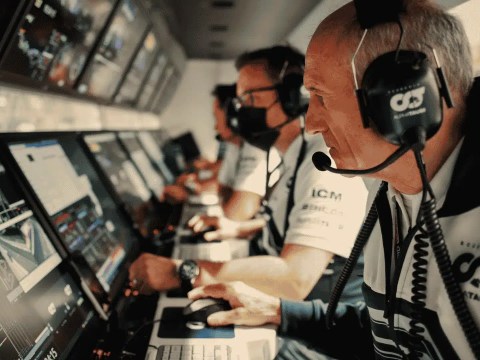
In Formula 1, championship teams don't select strategy based on talent alone. They diagnose track conditions—temperature, grip, weather, tire degradation—before making decisions. The right strategy for one set of conditions is catastrophically wrong for another.

Leadership works the same way.

I've spent twenty years watching brilliant executives fail in roles they should have owned. The pattern became unmistakable: organizations diagnose talent when they should be diagnosing conditions. They evaluate credentials, track record, cultural fit—while treating the organizational environment as background noise.

Conditions are not background. They are the primary variable.

Before any leadership placement, I assess six conditions that predict whether your hire will succeed or fail—five that diagnose the track, one that diagnoses the driver:

1. Founder Phase

Where is the founder in their evolution—asset or bottleneck?

2. Track Surface

What kind of race is this organization running—sprint, endurance, or turnaround?

3. Boundary Architecture

Are the rules of engagement clear enough for leaders to perform at the edge?

4. Transition Readiness

Is this organization prepared to evolve beyond its current leadership?

5. Governance Reality

What's actually happening at board level beneath the credentials?

6. Executive Calibration

Is this executive's operating configuration aligned with what these conditions demand?


About Charlie Solorzano

Born in Guadalajara, based between Guadalajara and Houston, I've spent two decades navigating the complexity most cross-border executives never see.

I don't just place bilingual leaders. I identify executives who understand what "family business" means in Guadalajara versus what "startup culture" means in Austin—who can navigate USMCA compliance, nearshoring logistics, and dual-market board expectations simultaneously.

As Managing Partner at Alder Koten and member of the AESC, I co-lead our Technology, AI, Data, and Product Management practices. But my differentiation isn't firm credentials—it's pattern recognition across two markets that most recruiters treat as one. I've seen this movie hundreds of times. I see what others miss.

"Most executive searches fail not because of talent—but because no one diagnosed the conditions first."

— The Race Conditions Model™


How The Race Conditions Model™ Works

Six diagnostic frameworks. Five diagnose the track—the organizational conditions that determine whether any executive can succeed. One diagnoses the driver—the invisible operating parameters that credentials can't show. Together, they answer the question most searches never ask: not just who should we hire, but can anyone succeed here yet?


1

Diagnose the Track

I assess five organizational conditions before candidate identification—founder phase, track surface, boundary architecture, transition readiness, and governance reality. This diagnosis shapes the entire search strategy.

2

Calibrate the Driver

Using The Driver Calibration™, I assess executive operating configuration—not just credentials. Then match calibration to conditions using The Tire Compound Strategy™.

3

De-Risk the Transition

Through The Stewardship Protocol™, I de-risk the transition emotionally, culturally, and operationally—so leadership changes stick.

The Complete Race Conditions Framework

I've codified two decades of pattern recognition into a comprehensive diagnostic system: five conditions that diagnose the track, one that diagnoses the driver, six frameworks, one methodology for the highest-stakes leadership decisions you'll make. This isn't generic hiring advice. It's a field-tested protocol for reading organizational conditions and executive calibration before making moves that can't be undone.


The Six Conditions

Each condition in The Race Conditions Model™ has a corresponding diagnostic framework—field-tested across two decades and two markets. Five diagnose the track. One diagnoses the driver.

🎯

The Founder's Paradox™

CONDITION: FOUNDER PHASE

Diagnoses where the founder is in their evolution—and whether their presence accelerates or constrains the organization's trajectory. Maps the paradox where the control that built the company becomes the bottleneck to its growth.

Learn More →
🏎️

The Tire Compound Strategy™

CONDITION: TRACK SURFACE

Matches executive durability and speed-to-impact to your business conditions. Diagnoses whether you need sprint intensity, endurance pacing, turnaround urgency, or institutionalization patience—then finds leaders calibrated for that specific race.

Learn More →
🏛️

The Stewardship Protocol™

CONDITION: TRANSITION READINESS

Assesses whether your organization is prepared to evolve beyond its current leadership. Diagnoses stakeholder alignment, cultural receptivity, and structural support—the infrastructure that determines whether transitions succeed or fail.

Learn More →
🏁

The Track Limits Principle™

CONDITION: BOUNDARY ARCHITECTURE

Maps the clarity of authority structures, decision rights, and organizational boundaries. Diagnoses whether incoming executives will have the clarity to perform at their edge—or be paralyzed by ambiguity.

Learn More →
📊

The Director Telemetry™

CONDITION: GOVERNANCE REALITY

Reveals what's actually happening at board level beneath the credentials. Six diagnostic channels that expose hidden dynamics, capabilities, and dysfunction—the forces that shape executive success more than most hiring decisions account for.

Learn More →
🎚️

The Driver Calibration™

CONDITION: EXECUTIVE CALIBRATION

Reads the invisible operating parameters that credentials can't show. Diagnoses Operating Horizon, Complexity Bandwidth, and current state—revealing whether an executive is configured for these specific conditions, not just qualified on paper.

Learn More →

Strategic Services for Complex Leadership Challenges

Specialized executive search for founders, investors, and companies navigating cross-border expansion, high-growth scaling, or institutional transitions—all informed by The Race Conditions Model™.

🌎

U.S.-Mexico Cross-Border Executive Search

C-suite leaders who navigate USMCA compliance, nearshoring logistics, dual-market operations, and cultural nuances that bilingual executives miss. 20+ years in both markets.

When to engage: Opening first Mexico operations, relocating manufacturing under nearshoring mandates, or scaling teams across both markets.

Learn More →
🚀

Startup Executive Search

Stage-specific C-suite placement from seed to Series C. CTOs who scale infrastructure, CFOs who manage investor expectations, CPOs who build roadmaps, CROs who construct repeatable sales engines.

When to engage: Scaling 20→200 employees, raising Series B/C, or hiring your first CFO/CRO and don't know what "good" looks like at your stage.

Learn More →
📱

Product Management Leadership

Product leaders from Associate Product Manager to Chief Product Officer who balance user needs, technical constraints, and business strategy across B2B SaaS, fintech, consumer tech, and marketplaces.

When to engage: Transitioning founder-led product to professional PM organization, or hiring your first VP/CPO who can build roadmaps and teams simultaneously.

Learn More →
💼

Executive Search & C-Suite

C-suite placements for companies navigating energy transition, nearshoring expansion, or venture-backed growth. 20+ years of pattern recognition across technology, manufacturing, and high-growth sectors.

When to engage: Facing generational transition, institutionalizing founder-led companies, or building executive teams for cross-border operations.

Learn More →
👥

Board Member Search

Independent Directors, Advisory Board Members, and Non-Executive Directors who bring sector expertise, governance experience, and strategic networks—not just resume credentials.

When to engage: Preparing for institutional funding, building fiduciary governance for family businesses, or adding strategic advisors with operating credibility.

Learn More →
🌐

Alder Koten - IMD

Access worldwide executive search capabilities through Alder Koten - IMD's global network. Partner firms across 25+ countries for multi-market placements, digital transformation, and international expansion.

When to engage: Expanding beyond U.S.-Mexico into Europe, Asia-Pacific, or LATAM, or requiring simultaneous placements across multiple geographies.

Learn More →

See What You're Missing

Facing a founder transition, cross-border expansion, or C-suite hire where the stakes are too high for trial and error? Let's diagnose the race conditions before making moves that can't be undone.

Schedule Your Confidential Consultation

✓ 30-minute strategic assessment   •   ✓ No obligation   •   ✓ 20+ years U.S.-Mexico expertise

📊 Free Resource: The Executive Hiring Timeline

Most founders hire the RIGHT executive at the WRONG stage.

Download my comprehensive guide: When to hire each C-suite role from Seed to Series C+ with real compensation benchmarks for U.S. and Mexico markets.

Download Free Guide →

23 pages • Stage-by-stage roadmap • Real compensation data • Red flags to avoid

Recent Articles

February 7, 2026

Why Most CHRO Searches Fail Before They Start

CHRO searches fail not because companies hire bad candidates. They fail because companies don't know what they're hiring for. The board remembers the HR executive who handled compliance. The CEO wants a strategic thought partner but can't articulate what that means. The search committee evaluates candidates against criteria that don't predict success in the actual role. The solution isn't more thorough interviews. It's clarity about what the role actually requires at this specific company at this specific moment, before the search begins.
February 6, 2026

The Founder-Friendly Trap: When Loyalty Hurts Business

The people who built your company are not always the people who can scale it. Founders know this. Boards suspect it. Early employees feel it. And everyone keeps pretending because the alternative feels like betrayal. This article names the loyalty tax that scaling startups pay when founders confuse gratitude with governance, and explains why being truly "founder-friendly" to the business sometimes means making the hardest call about the people who got you here.
February 3, 2026

Due Diligence on People: The Missing Chapter in Deals

Deal memos are exhaustive on financials and superficial on people. Human capital miscalibration should be modeled like integration risk — with probability, impact, and mitigation cost. Here's the missing chapter that determines whether your returns are real or overstated.
February 2, 2026

The Friday Driver Dilemma: When Interviews Predict Nothing

Practice conditions don't predict race performance. Interview conditions don't predict job performance. Here's why even brilliant interview performances tell you almost nothing about how an executive will operate when strategy collides with reality—and how to design assessments that measure what actually matters.
January 28, 2026

Why Your VP Sales Failed: The Setup Nobody Names

Most VP of Sales failures aren't talent failures — they're organizational failures wearing a human face. The founder succeeded despite the lack of systems. The VP Sales cannot succeed without them. Here are the four conditions that guarantee failure, and what to fix before your next hire.
January 27, 2026

The Optimization Trap: When Speed Becomes Sabotage

F1 is running three pre-season tests for 2026 because nobody knows how the new cars will behave. They refused to measure performance before understanding the system. Most organizations skip this step entirely — rushing to optimization before exploration, then blaming talent when results don't follow. Here's what that actually costs.
January 27, 2026

Manufacturing’s Leadership Vacuum: Nearshoring’s Hidden Crisis

Nearshoring isn't constrained by capital—it's constrained by leadership throughput. Leadership development operates on a five-to-ten year lag while capital deployment operates on eighteen months. The mismatch is structural. Here's why factories scale faster than the organizations built to run them.
January 26, 2026

The Middle Management Void: Why Your Series B Is Stalling

our CFO spent three hours yesterday reconciling expense reports. Your VP of Engineering is personally reviewing every pull request. Your CTO is troubleshooting a customer's API integration. Welcome to Series B, where your C-suite has become the world's most overqualified middle management team. I see this pattern constantly in growth-stage companies. The org chart looks impressive. Strong executives at the top. Talented individual contributors doing the work. But between them? A hollow layer where directors and senior managers should be. McKinsey research shows investors attribute 65 percent of portfolio company failures to people and organizational issues. The most common structural failure? The missing middle. McLaren F1 spent half a decade learning this lesson the expensive way before restructuring their technical leadership. Your Series B doesn't have that kind of time.
January 23, 2026

The CFO Who Can’t Fundraise: Series B’s Most Expensive Mistake

Your new CFO has impeccable credentials. Twenty years at a Fortune 500 company. CPA. MBA from a top program. Six months in, your books are pristine and your controls are bulletproof. There's just one problem: you're heading into Series B and she freezes in front of investors. I see this pattern constantly. The board hires for financial stewardship when they actually need capital markets leadership. They get a brilliant controller in a CFO costume. These are fundamentally different skill sets. Ferrari lost a championship learning this lesson with Mattia Binotto. McLaren won consecutive titles because Zak Brown understood that commercial leadership and technical leadership require different people. Your Series B needs a CFO who can raise capital, not just count it.
January 19, 2026

The Tire Whisperer: Executives Who Excel in Resource-Constrained Conditions

Sergio Perez's 2020 Sakhir Grand Prix victory—from last place to first after a lap-one collision—wasn't just dramatic racing. It demonstrated a capability that separates certain executives from the rest: the ability to extract performance from conditions where conventional analysis says none should exist. Drawing from F1's greatest tire managers (Perez, Button, Alonso), this article explores why executives from well-resourced environments often fail when constraints arrive, how to identify leaders calibrated for scarcity rather than abundance, and why resource efficiency can become competitive advantage. The executives who master this capability don't just survive constrained conditions—they turn constraints into competitive space others can't access.
January 18, 2026

When the Pit Wall Goes Silent: Executive Decision-Making Under Uncertainty

The moment of truth for executives isn't when everything is clear and the organization is aligned. It's when the support structures go quiet, the information is incomplete, and the leader has to choose anyway. Drawing from Ayrton Senna's legendary 1991 Brazilian Grand Prix—where he finished with only sixth gear working and was lifted bodily from his car—this article explores why standard interview processes fail to assess the capability that matters most: decision-making when the pit wall goes silent. Most organizations hire executives who excel at executing consensus decisions, then watch them freeze when the consensus doesn't exist. Here's how to identify leaders calibrated for the moments when talent alone isn't enough.
January 16, 2026

Why Top Tier Executives Fail at Scrappy Startups

The resume looked perfect. VP of Product at a company everyone recognizes. Eight years building teams at scale. Six months later, she's paralyzed. Decisions that should take hours take weeks. The scrappy team that moved fast before she arrived now waits for processes that don't exist. She wasn't the wrong hire—she was the wrong calibration for the conditions. Executives from large tech companies operate inside invisible infrastructure: dedicated recruiters, established processes, automated systems. When they join startups where that infrastructure doesn't exist, their instincts pull them toward rebuilding what they had rather than adapting to what the startup needs. Stop hiring for pedigree. Start diagnosing for conditions. The question isn't whether they're talented—it's whether their talent is tuned for the track you actually have.
January 14, 2026

Founder Second Act: Life After Stepping Back from CEO

What happens when the company you built no longer needs you at the controls? This guide examines how founders navigate the transition from CEO to their second act—drawing lessons from Formula 1 team owners who faced the same challenge. From Ron Dennis's cautionary tale at McLaren to Ross Brawn's masterful reinvention, discover the frameworks that separate founders who thrive after transition from those who struggle with irrelevance.
January 13, 2026

Series B: When Founder Instincts Become Bottlenecks

Three Series B founders in Guadalajara. Each built product-market fit through sheer force of will. Each hired seasoned operators to scale what they'd created. Each watched those hires fail within nine months. The hires weren't wrong. The timing was. Founders thrive in Founder Mode—direct control, immediate decisions, instincts calibrated for chaos they can touch. But Series B shifts the conditions entirely. The founder calibrated for tight corners suddenly enters high-speed straights, still braking for corners that no longer exist. The Founder's Paradox™ names this pattern: the fierce control that built the company becomes the ceiling that prevents it from scaling. The pit window opens at Series B. Not every founder needs to step out entirely—but ignoring the calibration mismatch guarantees a revolving door of C-suite hires who "just didn't work out."

Frequently Asked Questions

Common questions about cross-border executive search, founder transitions, and C-suite hiring.

What is The Race Conditions Model™? +

The Race Conditions Model is my diagnostic framework for leadership decisions. Just as F1 teams diagnose track conditions before selecting race strategy, I assess five organizational conditions before any executive placement: Founder Phase, Track Surface, Boundary Architecture, Transition Readiness, and Governance Reality. Most searches fail not because of talent—but because no one diagnosed the conditions first.

Learn more about The Race Conditions Model™ →

When should I hire my first CFO? +

Most startups need a CFO when they're raising Series B or scaling from 20 to 200 employees. The signal isn't just fundraising—it's when financial decisions shift from 3-month cycles to 3-year strategic bets. A CFO brings investor relations expertise, audit committee experience, and the ability to manage board-level financial reporting that founders typically lack.

What makes U.S.-Mexico cross-border executive search different? +

Cross-border executive search requires cultural fluency beyond language. The best executives understand what "family business" means in Guadalajara versus what "startup culture" means in Austin. They navigate USMCA compliance, dual-market board expectations, nearshoring logistics, and regulatory complexity that bilingual executives without cross-border experience typically miss.

How do I know if I'm experiencing The Founder's Paradox? +

Key signal: Your company's growth has plateaued at your personal capacity ceiling. The control that built the company has become the bottleneck to its scale. You're making every major decision, approving every hire, and your team waits for your input before moving forward.

This is The Founder's Paradox—one of the five conditions in The Race Conditions Model. Diagnosing Founder Phase before any C-suite hire prevents the most common executive placement failure: hiring talented leaders into conditions where they cannot succeed.

Learn more about The Founder's Paradox™ →

What's the difference between a COO and multiple VPs? +

A COO creates organizational integration across functions—connecting sales, operations, product, and customer success into a coherent system. Multiple VPs each optimize their own function. You need a COO when cross-functional dependencies create bottlenecks, when the CEO is spending 80% of time on operations versus strategy, or when scaling from 50 to 200+ employees requires process implementation expertise.

When should I hire a CTO versus a VP of Engineering? +

VP of Engineering manages the team and delivery. CTO sets technical architecture and long-term technology strategy. Split the roles when you have 20+ engineers, multiple product lines, or technical debt requiring architectural decisions. Before that, one person can handle both. Non-technical founders should hire a CTO first. Technical founders often need VP Engineering before CTO.