Hiring a CCO for Mexico: 5 Mistakes U.S. Companies Make
February 23, 2026
The CFO Who Arrived Too Early (And Too Late)
February 25, 2026
Why Executives Fail: Conditions vs Talent
The board has already updated the spec.
The first executive didn't work out. The second didn't either. Now, eighteen months and two searches later, everyone is confident they've finally identified "the real issue." This time they want someone with more enterprise experience. Or deeper industry expertise. Or a different leadership style.
The pattern I see repeatedly: a talented executive struggles, gets replaced by another talented executive, who also struggles. By the third search, the board is questioning their judgment, the CEO is exhausted, and the conditions that caused each failure remain unchanged.
Most executive failure is misdiagnosed.
The problem usually isn't the driver. It's the track.
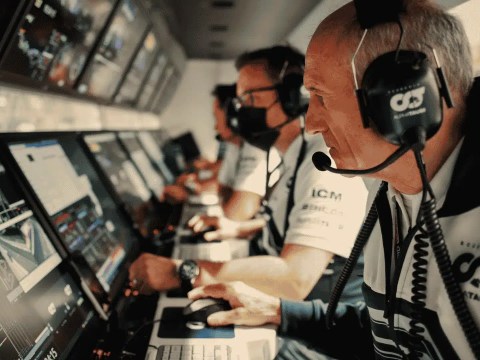
The Lesson Formula 1 Keeps Teaching
Mercedes' W15 wasn't fast or slow. It was temperature-sensitive. In cool conditions, it looked brilliant; the car's ability to quickly heat tires into their optimal window gave them an edge. In heat, it fell apart. Same car. Same drivers. Different track conditions. The calibration didn't change. The conditions did.
The temptation, watching a team struggle at a specific race, is to blame the driver or the car. But often neither is the problem. The conditions didn't match the calibration.
The Executive Parallel
This dynamic plays out constantly in executive search. A company hires a CFO from a high-growth SaaS company. Impressive credentials. Strong track record. Exactly the profile the board wanted.
Six months later, the CFO is struggling. The board wanted enterprise reporting discipline. The systems were still startup-grade. The CFO absorbed the gap, caught between board expectations and the reality of infrastructure.
The instinct: this CFO isn't as strong as we thought. Find someone with more experience.
But the conditions haven't changed. The accounting systems are still inadequate. The data infrastructure still doesn't support the reporting the board demands. The finance team is still under-resourced relative to the company's complexity.
Hiring a better CFO under the same conditions produces the same outcome. The problem wasn't the driver. It was the track.
Conditions You Might Be Missing
When executives underperform, I ask clients about conditions before we discuss replacement:
Decision architecture. Who actually decides what? When decision rights are unclear, even talented executives get stuck in approval loops rather than executing. Changing the executive doesn't change the architecture.
Resource reality. Does this executive have the team, budget, and infrastructure they need? Many searches occur because an executive "couldn't scale the function," when the actual problem is insufficient headcount or inadequate systems.
Support structure. Is this executive getting the CEO access, board visibility, and peer collaboration they need? Some conditions make success nearly impossible, regardless of an individual's capability.
Strategic clarity. Does this executive know what success looks like? Vague mandates create underperformance that looks like incompetence but is actually confusion.
Organizational health. Is the rest of the leadership team functional? An excellent COO can't succeed if the CEO is the ceiling, if peers are territorial, or if the board is dysfunctional. Conditions defeat calibration.
The Only Question That Matters
Have we created conditions where any executive could succeed?
If the answer is no, fix the conditions before the next search. Otherwise, you're preparing to fail again.
If the answer is yes, then the problem might be calibration. The executive could be talented but calibrated for different conditions, enterprise executive in a growth company, a growth executive in a turnaround, builder in an optimizer role.
The 2025 Australian Grand Prix illustrated this. Antonelli read the rain coming. Lawson didn't. Same track. Different interpretations of changing conditions. One finished fourth from 16th on the grid. One hit the wall.
Conditions create the constraints. Calibration determines whether an executive can navigate them. Both have to be right.
The Pattern That Repeats
Most executive underperformance is diagnosed backwards.
We assume the problem is talent and prescribe a replacement search. Often, the problem is conditions, and the replacement will struggle too.
Before you search for a faster car, ask whether you're reading the track correctly.
Boards replace drivers. They rarely repave the track.
If you don't change the conditions, you're not running a search. You're running a loop.
Charlie Solórzano is a Managing Partner at Alder Koten, advising founders and boards on cross-border leadership transitions across the U.S. and Mexico.
Considering an Executive Replacement?
A 30-minute conversation to diagnose whether you're facing a talent problem or a conditions problem — before you run the same search twice.
Schedule a Confidential ConsultationFrequently Asked Questions
Why do boards keep replacing executives who fail?
Because the instinct when an executive underperforms is to find better talent — stronger credentials, more experience, someone who's done it before at a bigger company. But if the conditions that caused the first failure remain unchanged, the replacement will struggle too. Most executive failure is misdiagnosed as a talent problem when it's actually a conditions problem.
What conditions cause executive underperformance?
Five conditions commonly cause failure: Decision architecture — unclear decision rights trap executives in approval loops. Resource reality — insufficient team, budget, or infrastructure. Support structure — inadequate CEO access or peer collaboration. Strategic clarity — vague mandates that create confusion. Organizational health — dysfunctional leadership team or board. Changing the executive doesn't change these conditions.
How do you know if it's a talent problem or conditions problem?
Ask one question: have we created conditions where any executive could succeed? If the answer is no, fix the conditions before the next search. If the answer is yes, then the problem might be calibration — the executive could be talented but calibrated for different conditions, like an enterprise executive in a growth company or a builder in an optimizer role.
What's the difference between conditions and calibration?
Conditions are the organizational environment — decision rights, resources, support, clarity, health. Calibration is the executive's operating parameters — what pace, complexity, and pressure they're optimized for. Conditions create constraints. Calibration determines whether an executive can navigate them. Both have to be right for success.
What happens when boards keep replacing executives without fixing conditions?
The pattern repeats. Talented executive struggles, gets replaced by another talented executive who also struggles. Eighteen months and three searches later, the board is questioning their judgment, the CEO is exhausted, and the conditions that caused each failure remain unchanged. You're not running a search — you're running a loop.
What should boards do before starting a replacement search?
Diagnose conditions before discussing replacement. Assess decision architecture, resource reality, support structure, strategic clarity, and organizational health. If any of these are broken, the new executive will face the same constraints. Fix the track before you replace the driver — or you're preparing to fail again.